One Fine Stay Staff App — UX Dev v1
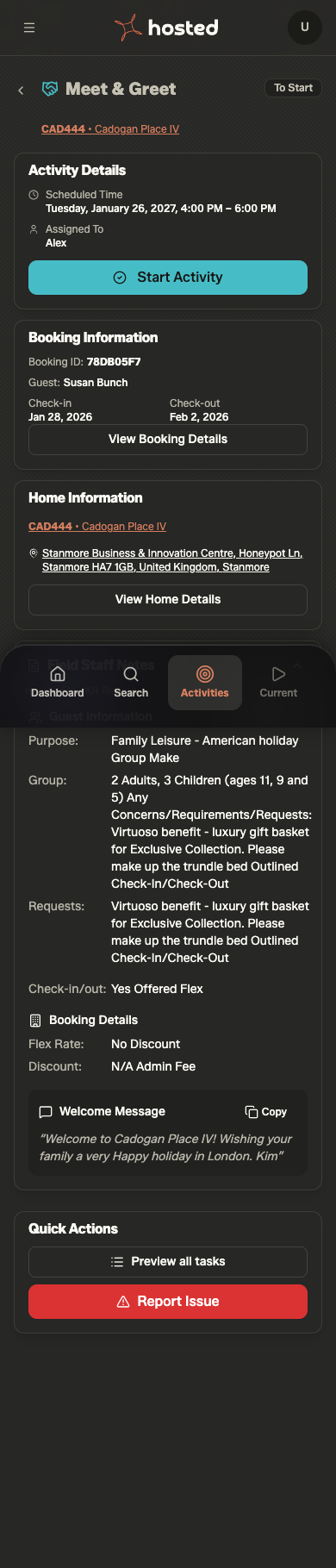
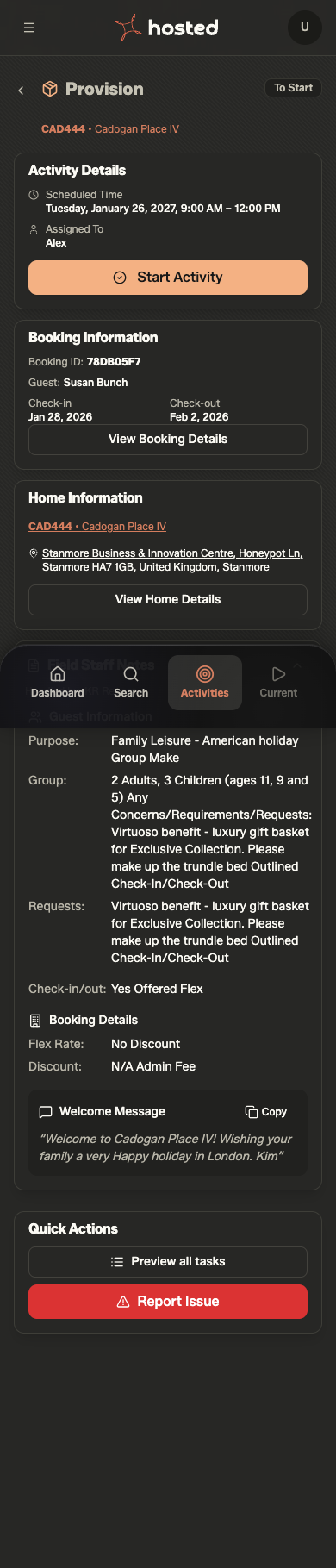
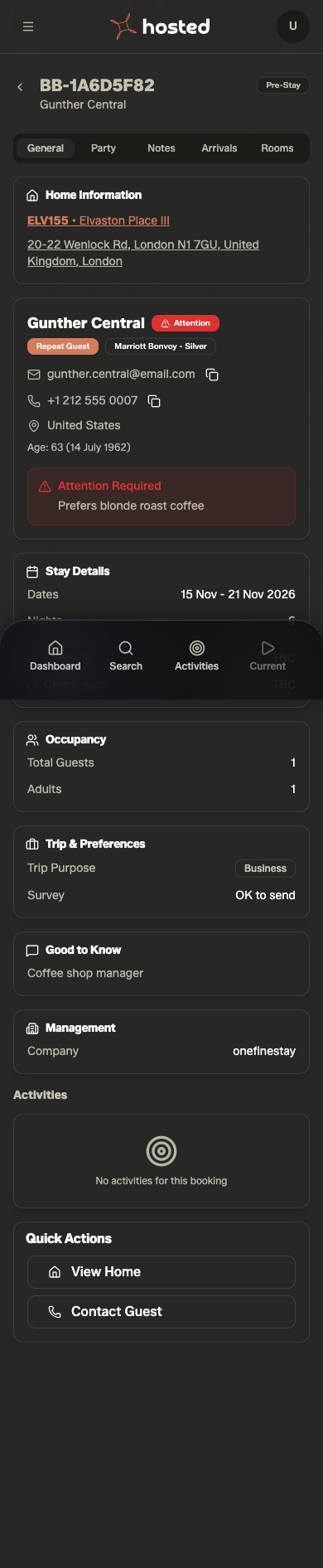
End-to-end product design and engineering ownership — London field research through a token-driven design system to a near-complete Next.js prototype, handed to engineering at ~85% production-ready.
“Going to London, doing real field research, and delivering a near-complete product in just a few months is exactly the kind of end-to-end ownership I want to see.”
— Manager review, yearly review · standout of the year
// context
One Fine Stay's existing staff app was a dated, limited iOS tool that didn't match how staff actually work in the field. When the project's PM left for paternity leave, the Staff App became top priority and I took it end-to-end. London field research the first week of November grounded every design decision in observed behavior, not assumptions.
// field research
Shadowing staff on-site in London — guest greets, provisioning runs, handovers, daily activity flow — let me identify the real pain points before opening Figma. Every screen in the prototype maps back to something observed in the field; nothing was speculative. The London trip is the reason the prototype reads as a tool staff would actually use, not a designer's interpretation of one.
// solution
- Field-grounded product thinking — every design decision traces back to something observed in London.
- Token-driven design system — shadcn/ui + Tailwind, structured to extend across future One Fine Stay internal tools.
- AI-assisted workflow throughout — Claude Code across the full design-to-build loop.
- Real operational stack — maps, CSV import, PDF export, validated forms — all wired in.
- Tested from day one — Jest + Testing Library at scaffold time, not retrofitted.
// what's next
Manager note for v2: rebuild on React Native + Expo. The Tailwind / Next.js stack proved the design and unblocked stakeholder feedback fast, but for a long-lived staff mobile tool a native stack gives better performance, easier extension, and a closer fit to how staff actually use the device. The web prototype's role was to settle the product questions — the native build inherits that work.
// outcome
- ~85% production-readyDesign states, interactions, validated forms, maps, data I/O all wired in. Engineering picks up a working reference.
- ~3 months kickoff to near-completeLondon field research → near-complete product, beginning of February 2026.
- stakeholder feedbackFunctioning prototype gave dramatically tighter feedback loops than a Figma-only handoff would have.
- manager reviewCited as a standout of the year — the end-to-end ownership pattern.